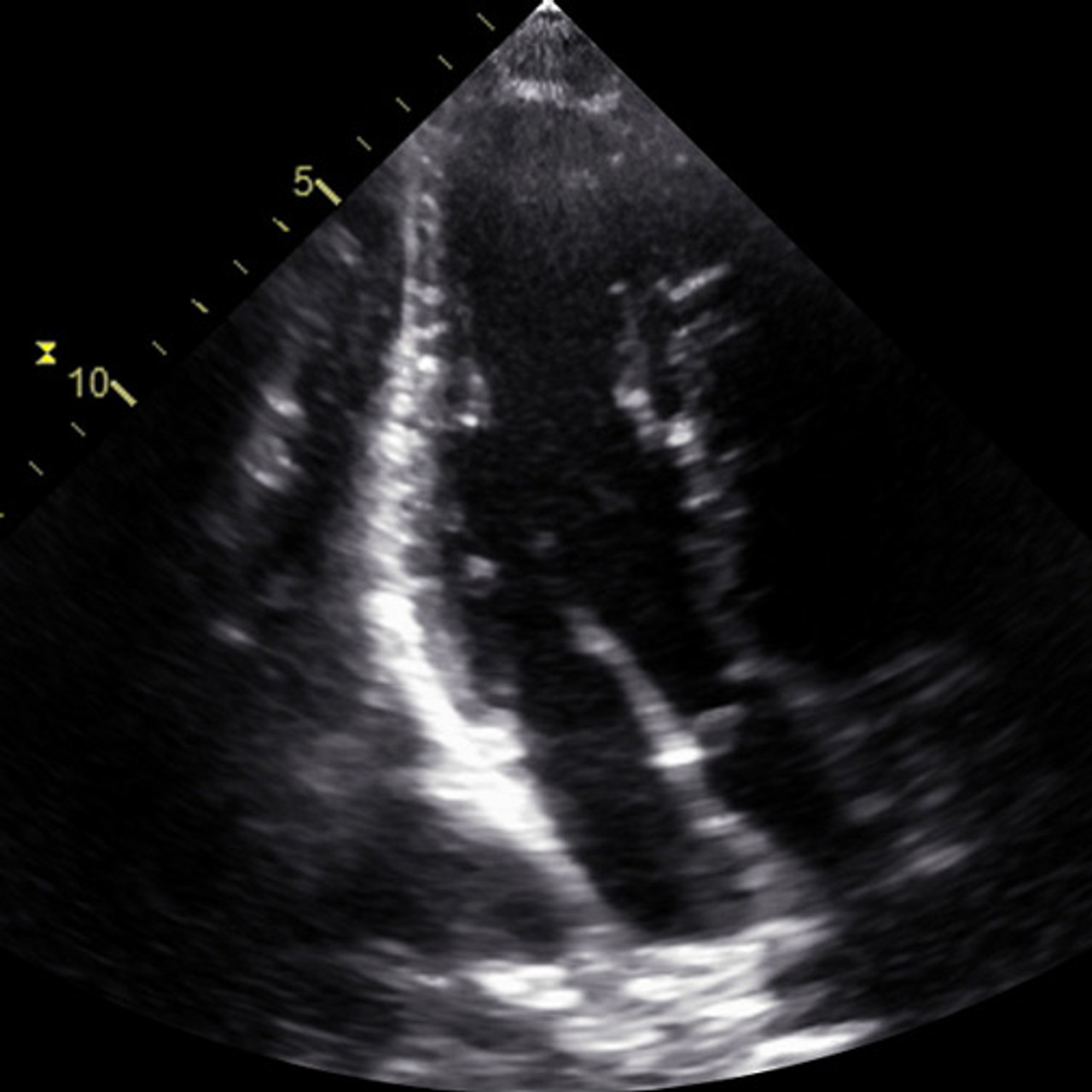
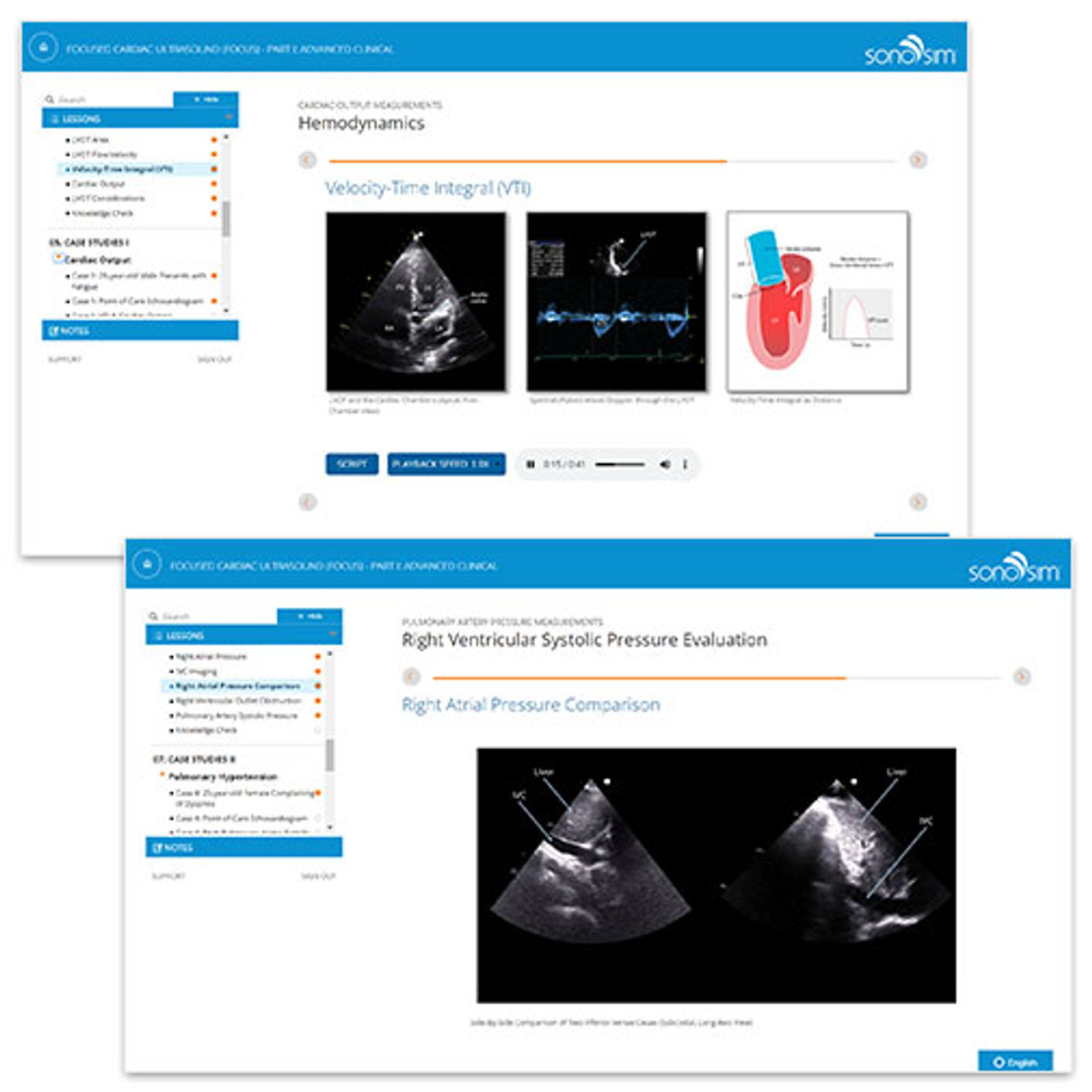
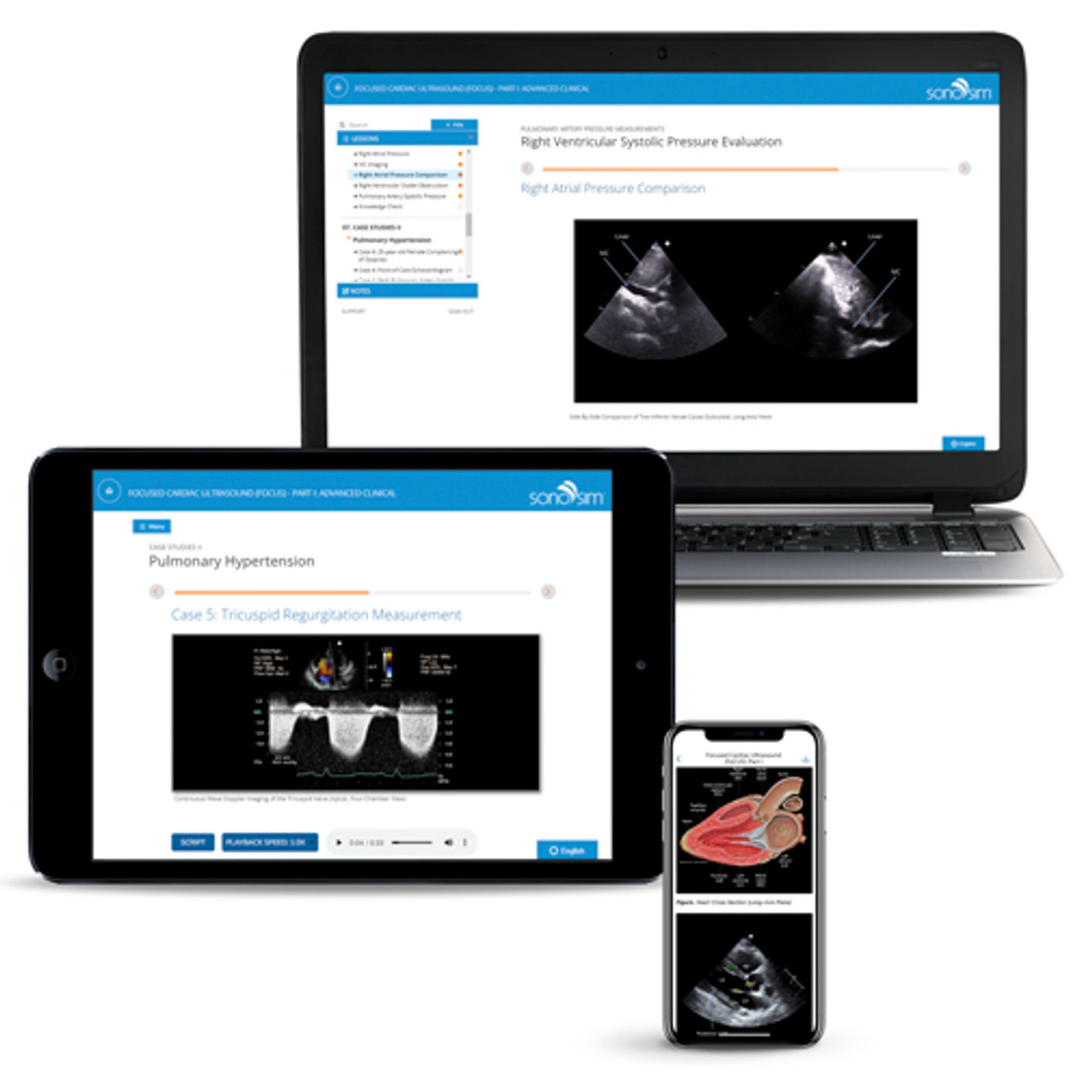
A growing body of evidence supports the use of focused cardiac ultrasound by non-cardiologists (sometimes referred to as "point-of-care echocardiography" or "focused echocardiography") as a way of rapidly evaluating and caring for patients, particularly in emergency departments and critical care units. Focused cardiac ultrasound involves a basic, simplified approach clearly distinct from a standard comprehensive echocardiographic examination. The Focused Cardiac Ultrasound (FoCUS) – Part 1: Advanced Clinical Ultrasound Module reviews echocardiography views in detail, including those from the parasternal, subcostal, apical, and suprasternal notch windows. Doppler adjuncts that can display information regarding the presence, direction, speed, and character of blood flow are highlighted. The course then presents how to obtain cardiac output measurements, including stroke-volume measurement and left ventricular outflow tract (LVOT) flow velocity. Lastly, the course explains how to determine pulmonary artery pressure measurements. Learners develop focused echocardiography skills through 10 hands-on scanning cases from real patients.
This activity has been planned and implemented in accordance with the accreditation requirements and policies of the Accreditation Council for Continuing Medical Education (ACCME) through the joint providership of the American College of Emergency Physicians, the Illinois College of Emergency Physicians, and SonoSim, Inc. The American College of Emergency Physicians is accredited by the ACCME to provide continuing medical education for physicians.
The American College of Emergency Physicians designates this enduring material for a maximum of 5.75 AMA PRA Category 1 Credits™. Physicians should claim only the credit commensurate with the extent of their participation in the activity.
Approved by the American College of Emergency Physicians for a maximum of 5.75 hours of ACEP Category I credit.